
Sustainable communities, eco-villages, and transition towns are built on the principles of autonomy, resilience, and deep connection. Yet, when it comes to coordination, they are often forced to rely on centralized SaaS tools—proprietary chat apps, corporate spreadsheets, and commercial cloud storage. These platforms not only extract data but build dependencies that clash with community values.
Here, we explore the architecture of EVE (Eco Village Enterprise), a digital operating system engineered from the ground up to respect sovereignty and support localized self-reliance.
The Problem with Centralized SaaS
Centralized platforms suffer from three fundamental flaws that threaten community resilience:
- Dependency: If an external server goes down, or a subscription rate increases, the community's critical tools can be held hostage.
- Data Extraction: Corporate platforms profit by profiling users, tracking behaviors, and treating community relationships as commodities.
- Fragility: Traditional cloud systems assume continuous high-speed internet access. In ecological niches, remote regions, or off-grid homesteads, this is a dangerous assumption.
EVE's Architectural Pillars
To counter these issues, EVE is designed around four technical and philosophical principles:
1. Sovereign Hosting & Federated Nodes
EVE is built to run on local servers, independent network nodes, or single-board computers (like Raspberry Pi) right inside the community. Communities fully own their database, assets, and compute power. When connection to the wider web is available, EVE nodes can safely replicate data across multiple instances, creating a redundant, self-healing network.
2. Biophilic Calm Computing
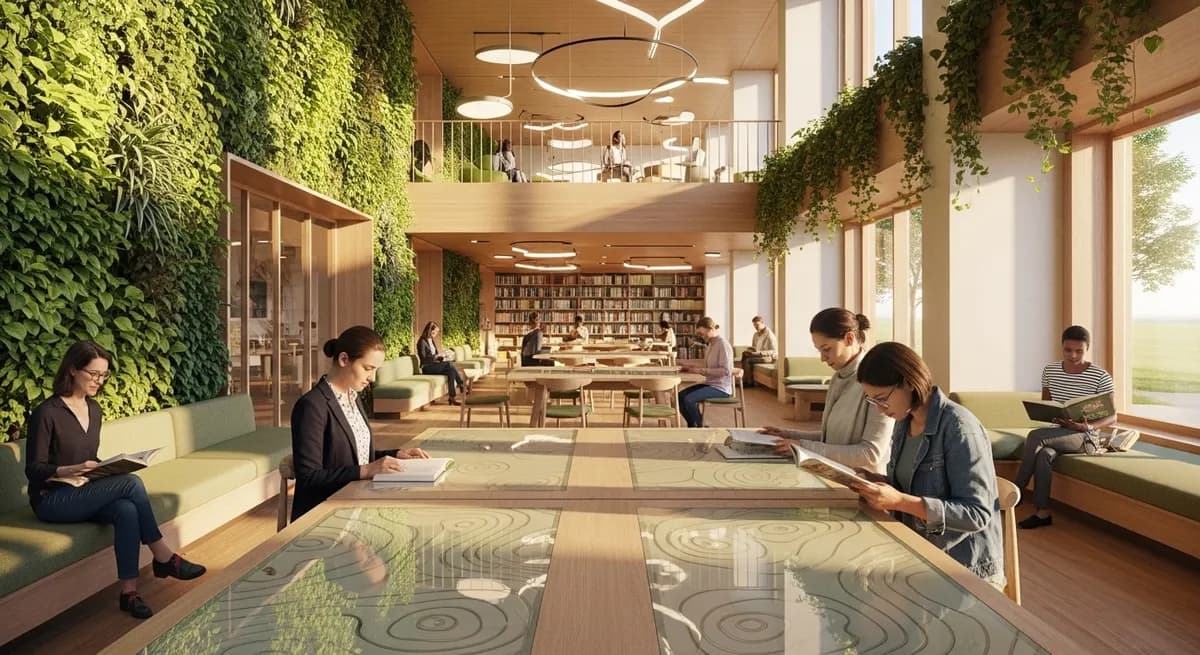
Technology should serve as a digital community garden, not a digital slot machine. Following biophilic design guidelines, EVE’s interface shifts tones dynamically to match the community’s timezone (warm gold in the morning, deep forest tones at night). Instead of anxiety-inducing red notifications, EVE uses rhythmic visual states, smooth glassmorphic overlays, and calming topography.
3. Offline-First Resilience
If the grid or primary internet goes offline, the village must keep operating. EVE is built with an offline-first sync mechanism. Local maps, tasks, resource readings, and communication channels remain functional locally and sync automatically the moment a connection is re-established.
4. Direct Democracy & Sociocracy
EVE does not use standard hierarchy. It natively builds in sociocratic governance tools, supporting consent-based decision-making, direct feedback loops (the Advice process), and non-violent communication protocols.
Supporting AI for Sovereignty
Many fear AI will centralize power further. EVE takes a different path with Nexus Intelligence—a localized, private RAG (Retrieval-Augmented Generation) system. This AI steward digests local knowledge bases, soil data, and water levels to provide agricultural and governance advice without ever leaking data to foreign servers.
EVE represents a peaceful revolution: technology that builds autonomy, respects privacy, and supports the quiet growth of sovereign communities. Join us in planting these digital roots.

AI Soft
Development Partner
Technology that supports autonomy, not dependency. Building the future of community-first software.